
Focused Shockwave Therapy
Focused shockwave therapy is a non-invasive treatment that sends pressure pulses through the skin to a specific spot in a painful tendon or soft tissue. It's most often used for stubborn problems that haven't settled with time, rest or exercise alone.
It isn't a quick fix, and it isn't right for everyone. Here's a plain-language look at how it works, what the research says, what a session is like, and who it may not suit.
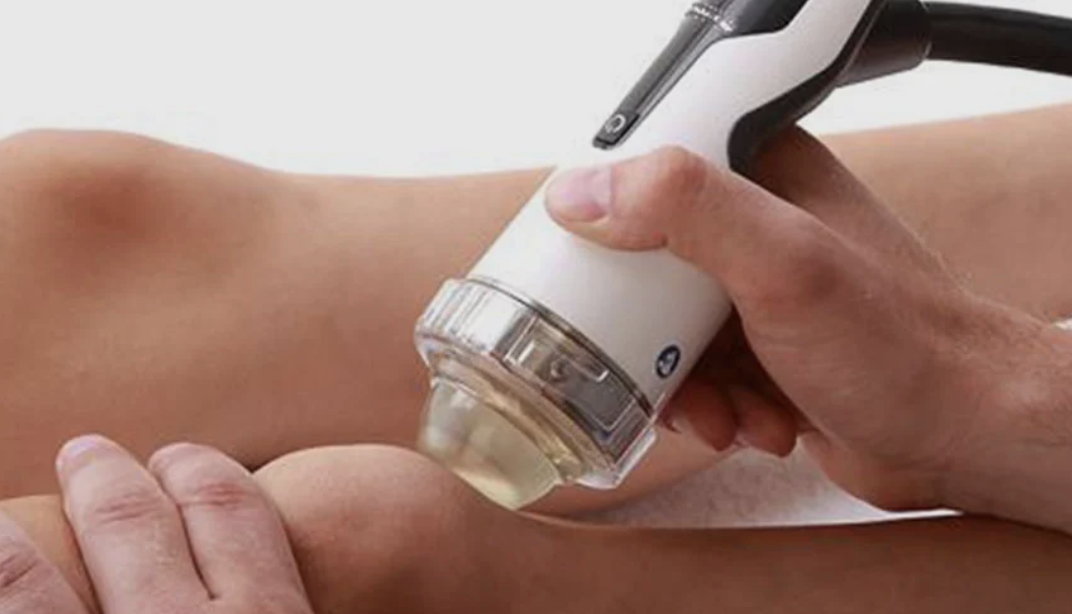
How does focused shockwave work?
Shockwave therapy is called ‘extracorporeal’ because the pulses are generated outside the body by a handheld device. They travel through the skin and are directed at the area that’s causing trouble. Researchers think the pulses influence how tissue responds at a cellular level, but the exact mechanism isn’t fully understood.
You may also hear about radial shockwave. The two are related but not identical:
Focused shockwave concentrates its energy at a chosen depth beneath the skin, so it can be aimed at a specific, deeper spot.
Radial shockwave spreads out from the tip of the applicator and is strongest near the surface, so it’s generally used for more superficial areas.
Device makers report that focused waves reach much higher peak pressures than radial ones, which is one reason some researchers treat the two as different therapies.
What conditions is it used for, and what does the research say?
Focused shockwave is most commonly used for long-standing tendon and soft tissue problems. The evidence is stringer for some conditions than others, so it’s worth being clear about which is which.
A widely cited systematic review in the British Journal of Sports Medicine looked at 23 studies and found:
Plantar fasciitis (heel pain) - evidence that focused shockwave may help
Calcific tendinitis (shoulder) - evidence that focused shockwave may help
Tennis elbow (lateral epicondylitis) - mixed evidence
Non-calcific rotator curl problems - low-level evidence of no benefit at low doses
The same review noted that where benefit was seen, it appeared ti depend on dose, and that both focused and radial approaches looked safe.
Two honest caveats. That review is more than a decade old, and newer research has built on it. A 2026 international expert consensus study points out that devices, energy levels and protocols vary a lot between studies, which makes results hard to compare. In short, shockwave may help some people with some conditions, and it won’t suit every problem.
What to expect in a session
Your practitioner will start with an assessment and your history, so they can confirm shockwave is suitable and find the exact spot to treat. Treatment itself is short. Gel is applied, and the hand-piece is pressed against the skin while the device delivers pulses tp the target area.
Most people describe a tapping or deep, achy sensation that can be uncomfortable over a sore spot. The intensity is adjusted to what you can tolerate. Tell your practitioner if it’s too much.
A course usually involves several sessions, rather than one, and the number depends on the condition and how you respond. Your practitioner will talk you through a plan that suits you, along with any aftercare advice.
Afterwards, mild side effects are common an short-lived: temporary redness, warmth and some soreness at the treated spot. These typically settle within a few days.
Who it may not suit
Shockwave is generally considered safe when it’s applied appropriately, but it isn’t for everyone. Commonly listed reasons to avoid or delay it include:
Pregnancy
Bleeding disorders, or use of blood-thinning medication
A tumour at the treatment sit
Infection at the treatment site
Open froth plates in children
Treatment over lung tissue
Possible side effects reported in an international expert consensus include pain at the treatment site, skin redness, bruising, mild swelling, nerve irritation and headache.
This is way a proper assessment comes first. Let your practitioner know about your full health history, medications and any recent injections before any treatment starts.
How shockwave fits into your care at Forma
A sore tendon or heel is rarely just a local problem. How you load, move and stabilise through the rest of your body can all feed into it. That’s why shockwave is usually one part of a broader plan rather than the whole plan.
At Forma, we start by looking at the whole picture: what’s sore, what’s contributing, and what you need to get back to doing. Where shockwave is appropriate, it can sit alongside hands-on care and a rehabilitation program built around how you move.
Frequently asked questions
Does it hurt? It can be uncomfortable, particularly over a tender spot. The intensity is adjusted to what you can tolerate, and sessions are short.
Is it safe? It’s generally considered safe when applied appropriately, with mostly mild and short-lived side effects. It isn’t suitable for everyone, which is why an assessment comes first.
Will it work for me? That depends on your condition, your history and how you respond. Research suggests it may help with some conditions, but results vary from person to person.
Thinking about shockwave?
If you’ve had a stubborn tendon or heel problem that isn’t settling, book an assessment at Forma. We’ll work out what’s going on and whether shockwave is a sensible option for you.
This article is general information and isn’t a substitute for advice from a registered health practitoner. All treatments carry some risk, and results vary. If your symptoms persist or worsen, seek advice from your healthcare practitioner.
