

Focused Shockwave Therapy
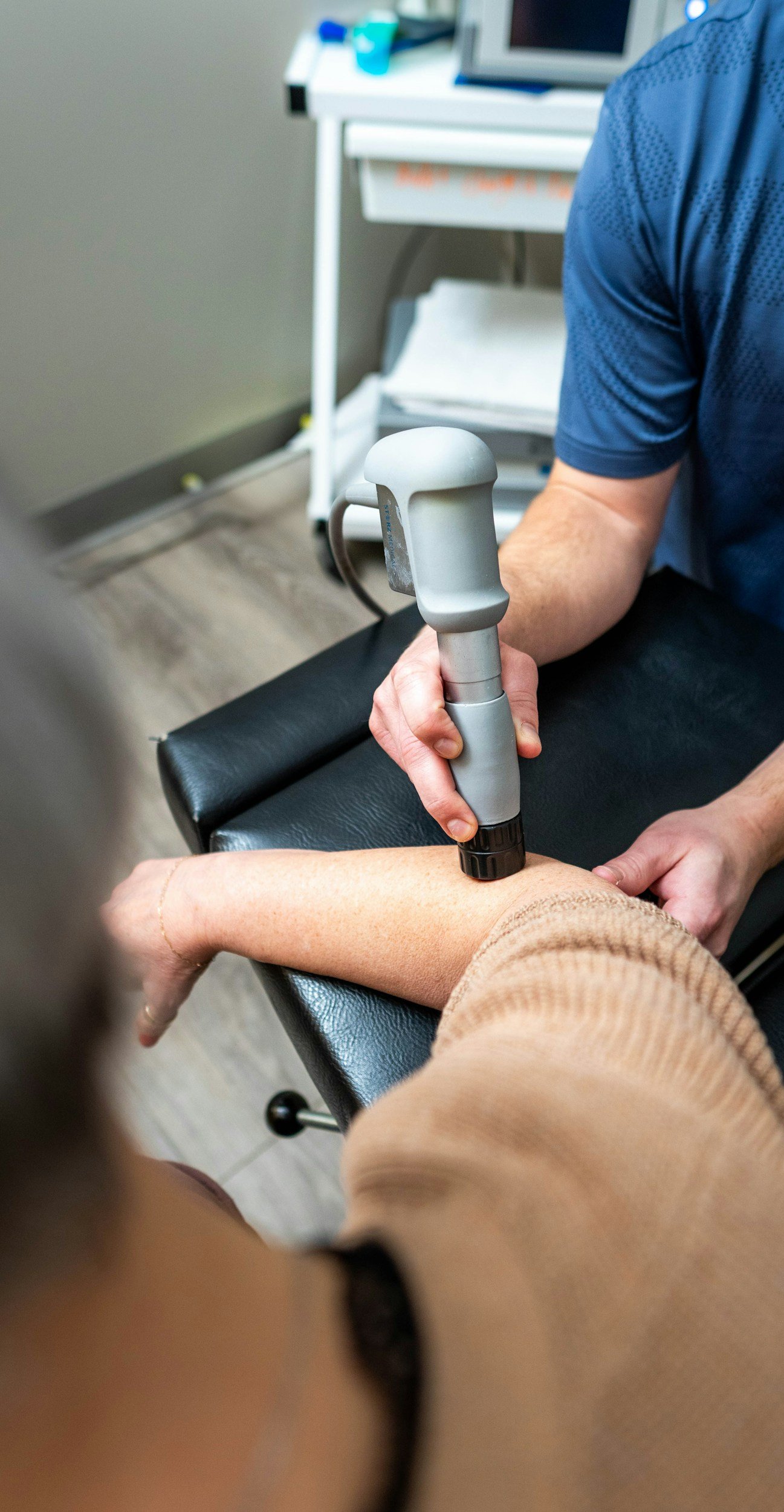
Focused extracorporeal shockwave therapy (ESWT) is a non-invasive modality that may be considered within a broader rehabilitation plan for selected musculoskeletal presentations. At Forma, focused shockwave therapy is considered after assessment. Your practitioner will discuss whether it may be relevant to your presentation, the available options and any questions you may have before treatment.
When is shockwave therapy right for you?
Patients commonly ask about focused shockwave therapy in relation to persistent tendon, heel or soft-tissue concerns. Whether it is appropriate depends on the individual assessment, your history and the clinical presentation. It is not a stand-alone solution. Where appropriate, it may be considered alongside activity modification, rehabilitation and other management strategies.
What is it and what to expect?
Focused ESWT uses acoustic pressure waves. It is non-invasive and may be considered for selected musculoskeletal presentations as part of a broader management plan.
Your appointment begins with a discussion and assessment. If focused shockwave therapy is considered appropriate and you choose to proceed, your practitioner will explain the process, discuss the expected sensations and answer questions before treatment. Your plan may also include rehabilitation strategies and guidance relevant to your work, training or daily activity.
The problem’s it’s best suit to.
-
![]()
Plantar Fasciitis.
-
![]()
Tendonopathy (Hip and Achilles)
-
![]()
Tennis & Golfer's Elbow
-
![]()
Hip Pain
-
![]()
Wrist Issues




Frequently Asked Questions
-
Focused extracorporeal shockwave therapy (ESWT) delivers targeted acoustic pressure waves to a set depth in tendon or soft tissue. There's no injection and no surgery - it's non-invasive, and it's used to help manage certain persistent musculoskeletal conditions as part of a broader rehabilitation plan.
-
Most people say it's more uncomfortable than painful. We set the intensity to what you can handle, and the treatment itself is over in a few minutes. A bit of tenderness in the area afterwards is normal and usually settles within a day or two.
-
A typical course runs around three to six sessions, roughly a week apart - but it depends on your condition and how you respond. We'll map out a realistic plan with you at the assessment rather than lock you into a set package before we've even had a look.
-
Usually, yes - and often you should. It is advised not to use it directly after the session.
Other than that there's generally no downtime, and most people get on with their day straight after. We'll be clear about what to keep doing and what to ease off, so the treatment and your training pull in the same direction.
-
The initial consult is $200 which includes a thorough assessment, treatment plan, shockwave and rehabilitation exercises.
Ongoing - If you are only receiving shockwave without any other rehab or treatment with it the cost is $125/session for one region.
If you have other issues then it is $45 on top of the standard consult price.
-
No, you do not need a referral.